

The Kemppi Pro Evolution is a liquid cooled modular multiprocess system for MIG/MAG, TIG and MMA. The 5200 version gives 520 A at an 80% duty cycle and 440 A at 100%, the 4200 version gives 420 A at 80% and 380 A at 100%. The supply is 400 V in a three phase arrangement, and the power source alone weighs 120 kg.
What this machine is for
This is a power source for heavy steel structure works, for shipbuilding, for bridge building and for the production of farm and construction machinery. It also goes to pipelines with thick walls and large diameters and to structures in aluminium and acid resistant stainless steel. The 520 A at an 80% duty cycle means you join the thickest steel parts in one go, with no breaks to cool the machine, and the 440 A at a 100% duty cycle sets the pace of work without breaks.
One housing handles three methods. You weld with wire in MIG/MAG, you move to TIG once you add the attachment, and you run a covered electrode in MMA. On the shop floor this saves space, and with changing orders it shortens the time to move from one technology to another, because you do not rearrange the whole station. The system is modular, so you extend it in stages: first the power source with a MIG panel, later the TIG attachment. You can move the wire feeder away from the power source, which helps when you work around a large part. The design holds the current parameters also in a dusty hall and with voltage swings, which on multi shift work matters more than the peak current value.
You match the panel to the job. MX handles pulse, MXE adds double pulse in MIG/MAG, TL runs TIG without pulse, and TX gives TIG pulse together with the Minilog function. So you buy as many functions as the station needs, and the operator has on the panel what he really uses, without spare settings. You can change the panel later too, when the orders change, because it is a separate module and not a fixed part of the power source.
Features and equipment
- Three processes in one power source: MIG/MAG, TIG once you add the attachment, and MMA.
- The MX panel with pulse in the MIG/MAG method.
- The MXE panel with double pulse: the cap has a ripple close to the TIG method, there is little spatter and less distortion of the material, so finishing work is shorter.
- The TL panel for the TIG method without pulse, simpler to operate.
- The TX panel with TIG pulse and the Minilog function.
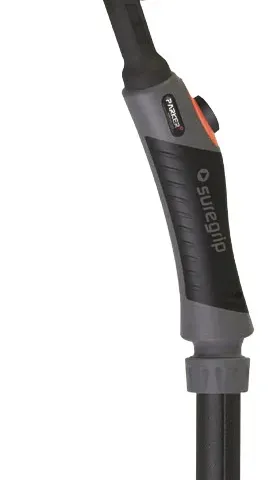
- Minilog: with a button on the torch you switch between two programmed welding currents, without taking your eyes off the pool. It helps in awkward positions and with changing material thickness.
- High frequency ignition in the TIG method and a stable arc at very low currents, for thin acid resistant tubes.
- Programs for carbon steel, stainless steel and aluminium alloys in the MX and MXE panels, with automatic correction of the arc parameters after you choose a program.
- Synergic control that links the wire feed speed with the voltage, which gives repeatability in production.
- Integrated liquid cooling, which holds the torch temperature also at currents around 520 A and extends the life of the consumable torch parts.
- Coolant flow monitoring, which protects the power source and the equipment against overheating.
- A modular platform with a movable wire feeder, for stations that need reach around a large part.
- The option to add a TIG attachment with a TL or TX panel to a power source you already have, without replacing the power source.
- Double pulse from the MXE panel controls the pool and the heat input, which on aluminium and stainless steel limits distortion of the part.
- Minilog with TIG pulse makes fusion easier without burn through on changing thicknesses, because you change the current during the run and not after it ends.
- Stable current parameters and resistance to hard conditions in the hall, including dust and voltage swings.
- A choice of panel to suit the budget and the technology needs of the station, from the simple MX to the fuller MXE or TX.
Technical data
| Brand | Kemppi |
|---|---|
| Type | modular multiprocess system, MIG/MAG, TIG, MMA |
| Maximum current of the 5200 version at 80% | 520 A |
| Current of the 5200 version at a 100% duty cycle | 440 A |
| Maximum current of the 4200 version at 80% | 420 A |
| Current of the 4200 version at a 100% duty cycle | 380 A |
| Supply voltage | 400 V, three phase |
| Cooling | liquid |
| Weight of the power source | 120 kg |
| Control panels | MX pulse, MXE double pulse, TL for TIG, TX TIG pulse and Minilog |
| Materials | carbon steel, stainless steel, aluminium alloys |
| Welding current in the record | up to 500 A |
What to watch out for
The supply is 400 V three phase, so pick the connection and the cable cross section for work at full current. Cooling is by liquid: check the fluid level, the flow and the tightness of the circuit before you start, and the flow monitoring will stop the process if a hose kinks. The power source alone weighs 120 kg, and on top of that come the wire feeder, the cooling unit and the cables, so plan unloading with a forklift and set up the station where the machine will stay for good.
The record does not say which version of the power source and which panel is in this unit, and the difference between the 5200 and the 4200 is 520 A against 420 A at an 80% duty cycle and 440 A against 380 A at 100%, so confirm the configuration before you buy. The record does not list a wire feeder, a torch or a TIG attachment, so ask about the equipment, because the panel decides whether you get pulse, double pulse or Minilog. For aluminium prepare rollers for soft wire and a liner, and for the TIG method a liquid cooled torch together with a set of electrodes and nozzles. You can add the TIG attachment later, but then count on matching a TL or TX panel, because without it the power source alone will not handle that method.
When you work close to the top current, watch that the cooling circuit stays clear and check the state of the consumable torch parts, because they wear the fastest. Look at how the wire feeder stands too: in a modular layout you can move it away from the power source, but then you need the right cable package, and its length affects the resistance of the circuit and the evenness of the wire feed.
How we sell used machines
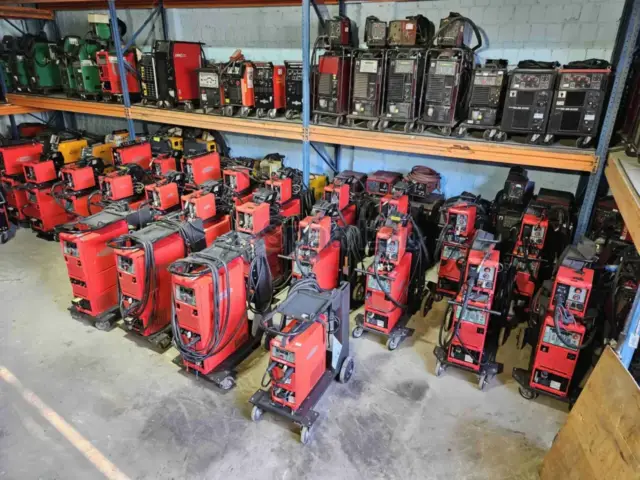
This unit was checked in our service workshop in Krotoszyn with measurements to PN-EN 60974-4 and a load test. The price includes the first year of the basic service package: an inspection with cleaning of the machine and a validation measurement. Further years can be added. We ship across the European Union, collection in person by appointment.