


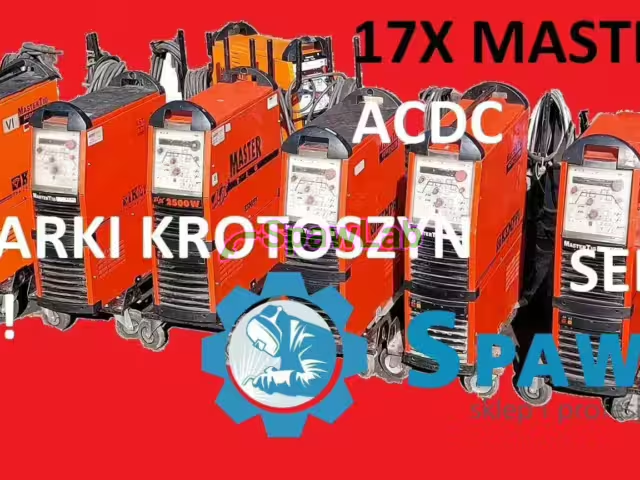


The Kemppi MasterTig MLS 3000 is an inverter TIG power source on direct current, supplied from a 400 V three phase mains. It gives 300 A at a 30% duty cycle, 230 A at 60% and 200 A at 100%. The set stands on a trolley and has an integrated liquid cooler, a water cooled torch and a foot pedal.
What this machine is for
This is a power source for precise TIG welding of high alloy, stainless and acid resistant steels, and of mild steel, copper and titanium as well. A current of 200 A in continuous work lets you lay long runs without breaks, and 300 A at a 30% duty cycle gives a reserve on thicker walls and on penetration runs. Inverter design means a lower weight of the source and a fast answer of the system to swings in the mains, so the arc keeps to the setting also in longer work under load.
The documentation aims the machine at the food industry, pipeline building, chemical installations and precision workshops. Control of the times of gas flow before and after welding and of the shape of the current slope down protects the end of the run against porosity, which matters on joints checked by radiography. The uses listed are the assembly of sterile pipeline installations in dairies and food processing, the production of tight pressure vessels of acid resistant alloys, the welding of thick walled tubes in power generation, the series production of housings and pressed parts, and reclamation workshops working on refined metals.
A water cooled torch and a foot pedal make this set a workshop station. With the pedal you drop the current during the run, when the part heats up, without taking your hands off the torch and the filler rod. Control like that suits thin walled pipelines and small parts laid out on a bench. Among the jobs listed there are also joints put through radiographic inspection and advanced metalwork, in which repeatability counts and not the pace.
Features and equipment
- Inverter power source of 300 A on a 400 V supply: transistor circuits turn the mains voltage into a steady welding current, at a lower weight than in transformer designs. The arc answers fast to swings in the mains, so the machine keeps the parameters through the whole shift under a steady load.
- Integrated liquid cooling system: the fluid runs in a closed circuit and takes the heat from the body of the torch, so the contact tips and the ceramic nozzles work longer even at 300 A, and the hand does not burn during hours of laying welds. The system is needed on thick walled tubes and massive stainless sections welded in the flat position.
- Water cooled TIG torch: the grip stays cool during hours of laying welds.
- Foot pedal: stepless correction of the current while welding, without taking your hands off the torch and the rod.
- MTM control panel: it times the gas flow before and after welding and shapes the curve of the current slope down, so the end of the run catches no porosity. You work the membrane buttons in a thick glove, but the wide menu calls for a look through the manual before the first setting.
- Memory channels: you save a full set of parameters, that is the current, the times of the cycle and the frequency of the pulse, in non volatile memory and call them up with a button when the range changes. That shortens the changeover with a few changes of part in a day and puts the work in order to WPS procedures, but you have to pick the values yourself first for a given joint.
- The Minilog function: a short click of the button on the grip switches the current between two programmed levels, that is between the main current and a lower base current, which saves the thin edges of small parts from burning through. The function helps in forced positions, vertical and overhead, where you decide yourself how the pool sets, but it calls for the switching to be timed with the feeding of the rod.
- Welding with pulsed current: the current goes in rhythm between a peak and a base value, the peak phase gives deep penetration, the base phase cools the heat affected zone and holds the pool back from running. The distortion of thin acid resistant sheets is smaller and the ripple on the face even, which matters on parts on show that do not go under a grinder later.
- The SPOT function: a timer counts out a set fraction of a second and cuts the current, so the portion of energy in the point is the same every time, and the tack comes out symmetrical and with no burn through. The mode takes lap joints and well fitted butt joints in thin materials, for example the housings of measuring and control equipment and the shrouds of pipelines.
- Transport trolley: the source, the cooler and the equipment move round the hall as one station.
Technical data
| Brand | Kemppi |
|---|---|
| Type | inverter TIG DC power source |
| Supply voltage | 400 V, three phase |
| Maximum welding current | 300 A |
| Current at a 30% duty cycle | 300 A |
| Current at a 60% duty cycle | 230 A |
| Current at a 100% duty cycle | 200 A |
| Type of current | DC |
| Torch cooling | liquid |
| Control panel | MTM, Pulse, SPOT and Minilog functions |
| Memory channels | yes, parameters of current, times and pulse |
| Remote control | foot pedal in the set |
What you get
- Kemppi MasterTig MLS 3000 inverter power source with the MTM panel
- transport trolley
- integrated liquid cooler
- water cooled TIG torch
- foot pedal for current control
What to watch out for
The source works on direct current alone, so for aluminium alloys you need a machine with an alternating current module. The 400 V supply needs a three phase socket and a circuit matched to the draw. You check the cooling circuit regularly, the level of the fluid and the tightness of the hoses decide the life of the torch, and a broken flow ends with the water system melting. The densely packed electronics of the inverter do not stand dust, so the filters and the inside need cleaning.
The pedal ties the welder to the station and forces a position at the bench, and on assembly in the field it can be awkward, though you plug it into the control socket and it takes over the setting as soon as you pick the mode on the panel. You can move the set on the trolley round the hall, but for loading onto a vehicle you need a ramp or a tail lift. The MTM panel has a wide menu, the first settings will take a while with the manual, and the memory channels have to be filled with your own settings. Look at the ceramic nozzle, the collet and the tip separately at collection.
This unit is sold
This machine has already gone to a customer. Similar units are listed below, and if you want the same model, leave your contact details in the form and we will let you know when the next one arrives.