


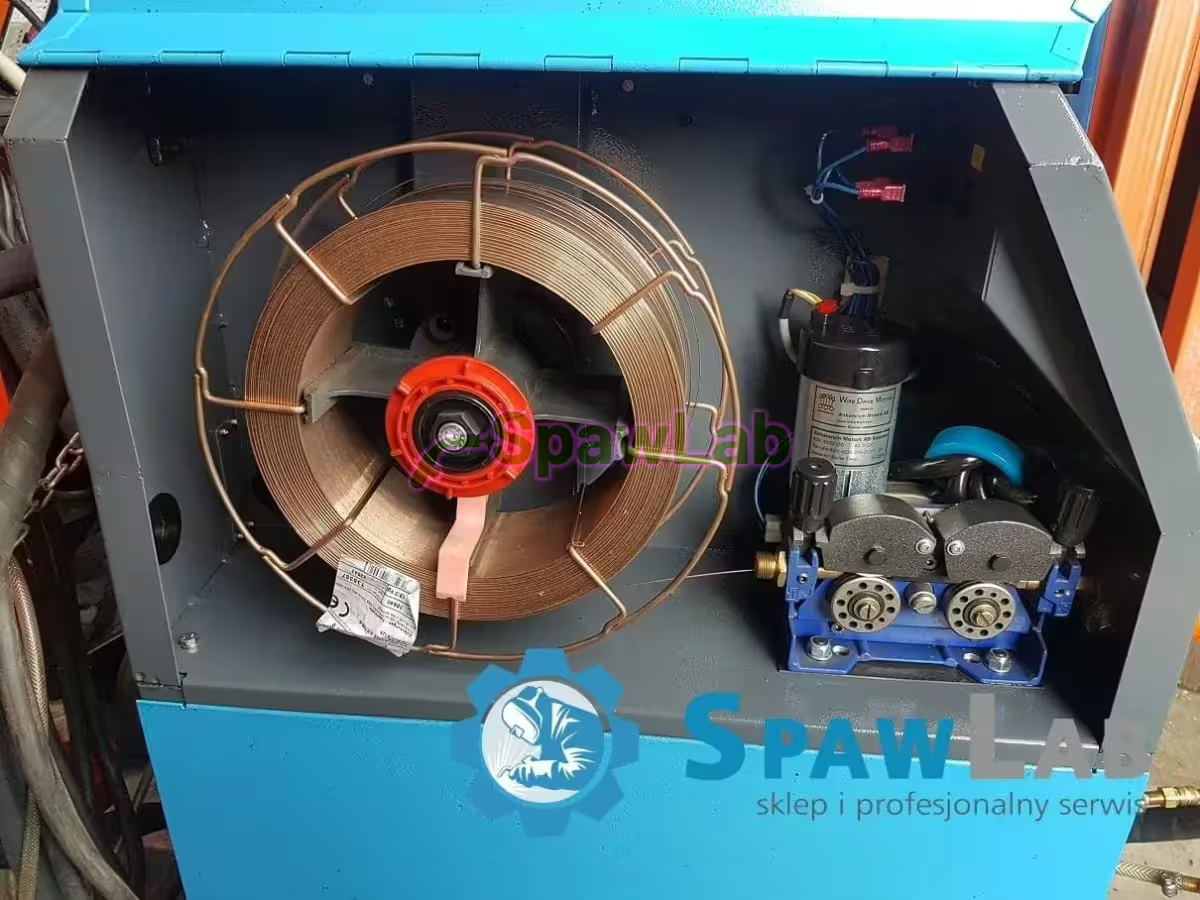
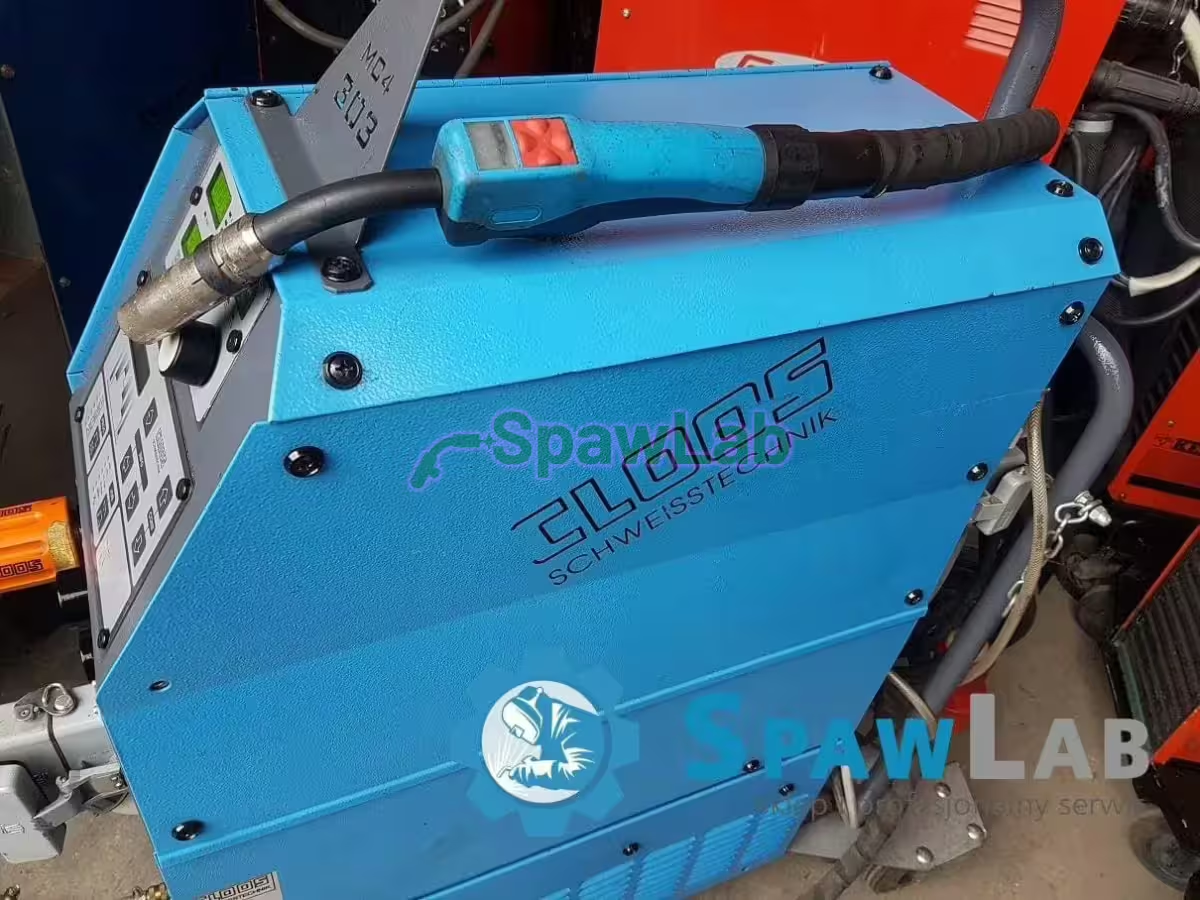

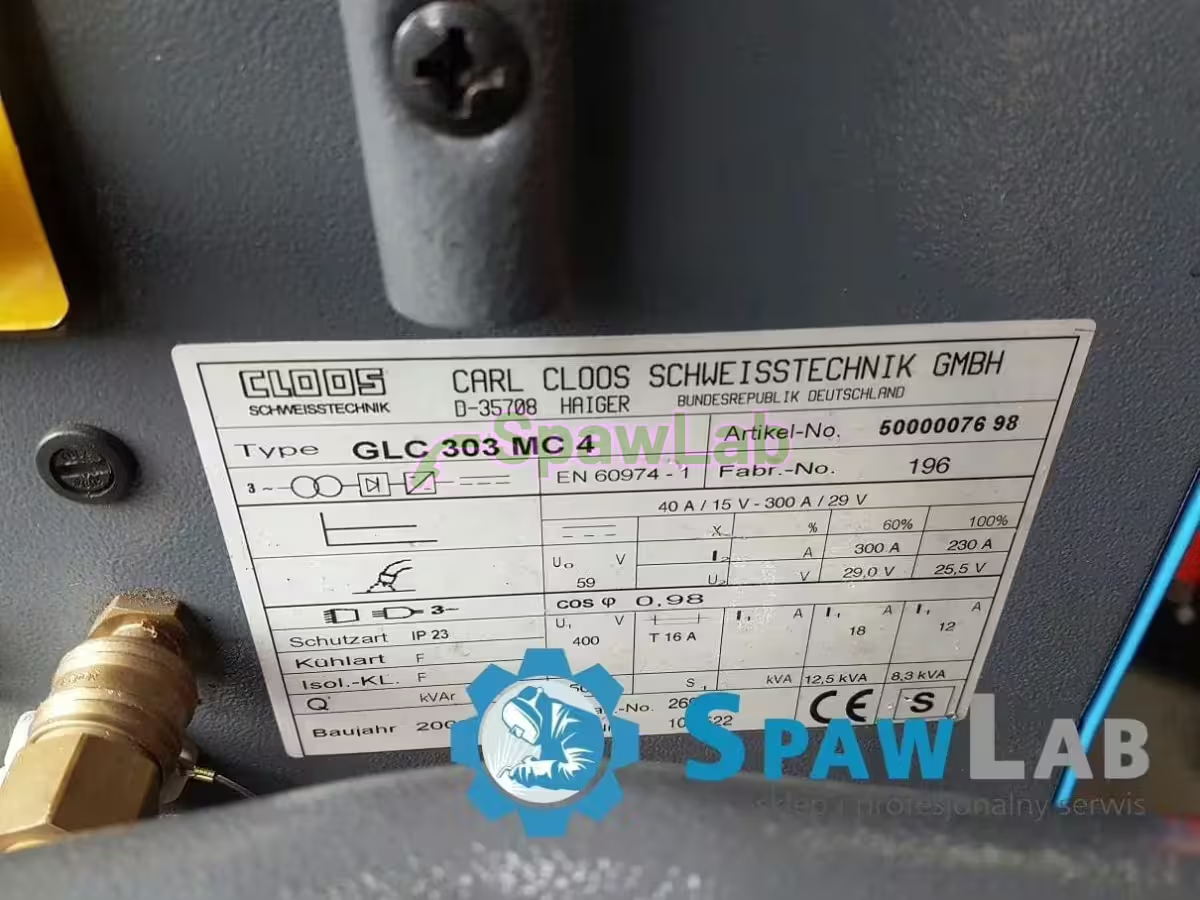



The Cloos GLC 300A MC4 is an inverter MIG/MAG welder for 400 V, with an integrated liquid cooling circuit and a 3 m torch controlled from the handle. The source gives 300 A at a 60% duty cycle and 230 A at a 100% duty cycle, and the whole set weighs 200 kg.
What this machine is for
This is a power source for work in heavy industrial conditions: production halls, the motor sector, sheet metal shops and the reclamation of machine parts. At a 100% duty cycle it holds 230 A, so you weld long parts made of rolled sections without breaks for cooling, and you take the peak of 300 A at a 60% duty cycle, when you melt through thicker structural materials. A supply from a three phase 400 V mains holds the power steady also under a heavy load on a prefabrication line, without the small drops of voltage that show in the face of long welds.
The machine handles several processes. In MIG/MAG you have synergy, pulse and braze welding with a copper based wire. After a change of setup it also works in TIG and with a covered electrode, which helps in maintenance, when one station has to cover different repairs. There are programs in the memory for stainless, carbon and fine grained steel.
Typical jobs are the series welding of alloy steel sections with pulsed current, the repair of body panels by braze welding, the welding of load bearing space frames at the full output of 300 A, the putting up of steel shelters with a covered electrode, the series joining of pipe spool pieces on ready programs for stainless steel, and the reclamation of trailers, where you correct the current straight from the torch.
Features and equipment
- Inverter architecture. The power transistors turn the 400 V into a steady direct current arc, with no drops of voltage under load. The source gives up to 300 A at a 60% duty cycle and 230 A at a 100% duty cycle. The modular electronics work out the parameters of the arc as you go, also on complicated welds.
- An integrated liquid cooling circuit in the trolley. The pump pushes the coolant through the hoses of the interconnected torch and takes the heat from under the gas diffuser and the contact tip, so the consumable parts do not melt at the highest load and you lay a single run for longer. The water pump is a requirement here and not an extra, because welders join steel sides and machine housings for a dozen or so hours.
- A 3 m torch for 400 A controlled from the handle. Buttons under the thumb change the current and correct the voltage, so you do not climb down from the scaffold and do not lift the mask to walk up to the panel. With the potentiometers and the buttons on the grip you call up a small change of voltage or move the base current of the programmed wave, so you make up for an error in the gap without putting out the arc. The pack needs care though, because throwing the lance down onto the bench from a height destroys the insulation.
- Digital synergic lines. The software ties the wire feed to the arc voltage, and you set one value, for example the thickness of the steel you weld. That shortens the choice of parameters and cuts down cold lap at the edge of the joint.
- Program memory for stainless, carbon and fine grained steel. From the console you call up ready sets of settings, so the work is repeatable also when a less practised operator stands at the machine.
- Welding with a pulsed arc. Repeated jumps of current tear off the drop without a short with the pool, so you put less heat into thin walled frames, and there is so little spatter around the nozzle that acid resistant sections need no grinding before painting. Pulse has the advantage when you assemble transfer pipelines on high space frames, where the face is to be even.
- Low energy braze welding with copper based wires, for example CuSi3. A short, focused arc melts only the filler and does not destroy the zinc coating on the panel, so it suits the renovation of car bodies and sheet metal repairs without waving of the sheet. This protects the anti corrosion layer against oxidation and limits the distortion that in classic MIG comes from too much heat, which is why the method is used on veteran car bodies and in assembly shops.
- Work in TIG after you switch the control over and connect the fitting with a regulator. A tungsten electrode and direct current let you repair valve seats and small pipe fittings.
- Welding with a covered electrode. The program matches the characteristic to basic and rutile electrodes, and the process does without a gas cylinder, so it will do for work outdoors and on the thickly painted brackets of farm machines. The cost is the chipping of thick slag, which slows down the laying of further layers in fillet welds.
- A wheeled trolley for the whole set.
Technical data
| Brand | Cloos |
|---|---|
| Source technology | inverter |
| Processes | MIG/MAG with pulse and synergy, braze welding, TIG, MMA |
| Supply | 400 V, three phase |
| Current at a 60% duty cycle | 300 A |
| Current at a 100% duty cycle | 230 A |
| Torch cooling system | liquid, integrated |
| MIG cable in the set | 3 m, for 400 A, controlled from the handle |
| Dimensions | 120 x 80 x 150 cm |
| Weight of the set | 200 kg |
What you get
- Cloos GLC 300A MC4 power source
- 3 m torch for 400 A controlled from the handle
- integrated liquid cooling circuit
- wheeled trolley
What to watch out for
The set weighs 200 kg at dimensions of 120 x 80 x 150 cm, so take a pallet truck for unloading and prepare a fixed place, even though the machine has a wheeled trolley. The 400 V supply needs a three phase socket, and the description gives no value for the fuse. The liquid circuit holds on the pressure in the lines: a bent return pipe ends with the current pack overheating, so run the hoses without sharp bends and check the coolant level and the pump before work. The heat sinks have to be blown through from time to time, because damp steel dust settles on the electronics. The torch is 3 m long, so on larger structures work out the distance from the station to the part.
For braze welding with copper wire change the liner in the torch for a teflon one, fit smooth drive rolls and feed clean argon, or the soft wire will jam. The synergic curves work properly only with the shielding gas they were saved for, and the memory blocks are closed and do not let you go beyond the range from the manual. The TIG mode in this machine is a stand in solution: the ignition is simple, without the clean starting circuits of sources meant for TIG alone, and for work you need a torch with an argon valve. Pulse works loudly, so ear protection is in place. Check what the set holds and how it looks before you decide.
This unit is sold
This machine has already gone to a customer. Similar units are listed below, and if you want the same model, leave your contact details in the form and we will let you know when the next one arrives.